
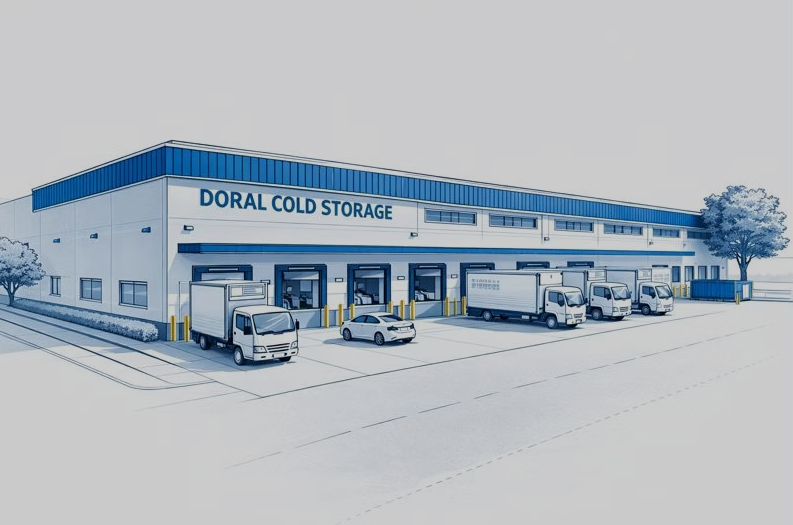
By RISE Realty | Miami Commercial Real Estate Specialists
Everyone is talking about multifamily. Everyone is talking about office. The investors paying close attention, however, are quietly building positions in something far less glamorous and far more profitable: cold storage real estate.
If you've never thought about temperature-controlled warehouses as an investment category, you're about to.
What Is Cold Storage Real Estate?
Cold storage facilities — also called refrigerated warehouses — are industrial buildings specifically engineered to maintain temperature-controlled environments. They store perishable goods: food and beverages, pharmaceuticals, vaccines, fresh produce, and increasingly, cosmetics and biotech products.
They're not glamorous. They're not in the skylines. They're the unglamorous infrastructure that keeps everything in your refrigerator and medicine cabinet available when you need it.
And right now, there isn't enough of them.
The Supply–Demand Gap That's Driving Returns
Here's the core thesis in one number:the US cold storage footprint has grown at a compound annual rate of less than 2% over the past decade (CBRE Cold Storage Outlook, 2025). Demand has grown significantly faster, driven by three converging forces.
Force 1: E-commerce grocery. Online grocery penetration has crossed approximately 12% of total US grocery sales (Coresight Research, 2025) — a number that seemed impossible a decade ago. Every online grocery order requires temperature-controlled last-mile fulfillment infrastructure. That infrastructure is in structural short supply.
Force 2: Pharmaceuticals. Major logistics companies are racing to build cold chain capacity for pharmaceutical distribution. UPS has publicly targeted significant growth in its healthcare logistics segment, with cold chain capacity expansion a core part of that strategy (UPS Investor Day, 2023). Major logistics operators including DHL have expanded dedicated pharmaceutical cold chain services to support the growing biologics and specialty medication distribution market. The vaccines, biologics, and specialty medications these companies distribute require precise refrigeration throughout the supply chain. The facilities to support that don't exist at the scale needed.
Force 3: Food safety regulation. Evolving FDA regulations around perishable food traceability and temperature monitoring are pushing food distributors toward professional refrigerated facilities and away from ad hoc solutions. Compliance is driving consolidation into purpose-built cold storage.
The result: the global cold storage market was valued at approximately $310 billion in 2026 and is projected to reach $720 billion by 2036 — a compound annual growth rate of 8.8% (Future Market Insights, 2026). In the US specifically, refrigerated warehouse revenues are running at approximately $9.3 billion annually (IBISWorld, 2025).
Why Cold Storage Outperforms Conventional Industrial Real Estate
If you're an investor who understands industrial real estate, cold storage is the premium tier — and here's why.
Higher yields. Cold storage construction costs are significantly higher than conventional warehouses — specialized refrigeration systems, insulated panels, controlled atmospheres. That capital intensity translates into higher rents and, typically, higher cap rates than standard industrial. Investors are compensated for the complexity.
Longer lease terms. Cold storage tenants invest heavily in customizing their space — specific temperature zones, specialized racking, compliance buildouts. That investment makes them extremely reluctant to relocate. Lease terms of 10–15 years are common. In a market where conventional industrial leases run 3–5 years, that lease stability is valuable.
Stronger tenant credit. The typical cold storage tenant is a major grocery chain, a pharmaceutical distributor, or a national food company. These are not startup tenants with uncertain balance sheets. They're investment-grade credits in many cases — exactly the kind of tenant profile that attracts institutional capital.
Non-cyclical demand. People eat regardless of what the stock market does. Pharmaceuticals are purchased regardless of the economic cycle. Unlike office or retail real estate, cold storage demand doesn't collapse during recessions. The demand driver is consumer behavior, not discretionary spending.
The Miami Opportunity Specifically
For investors and businesses in South Florida, cold storage isn't a distant asset class — it's in your backyard, and it's undersupplied.
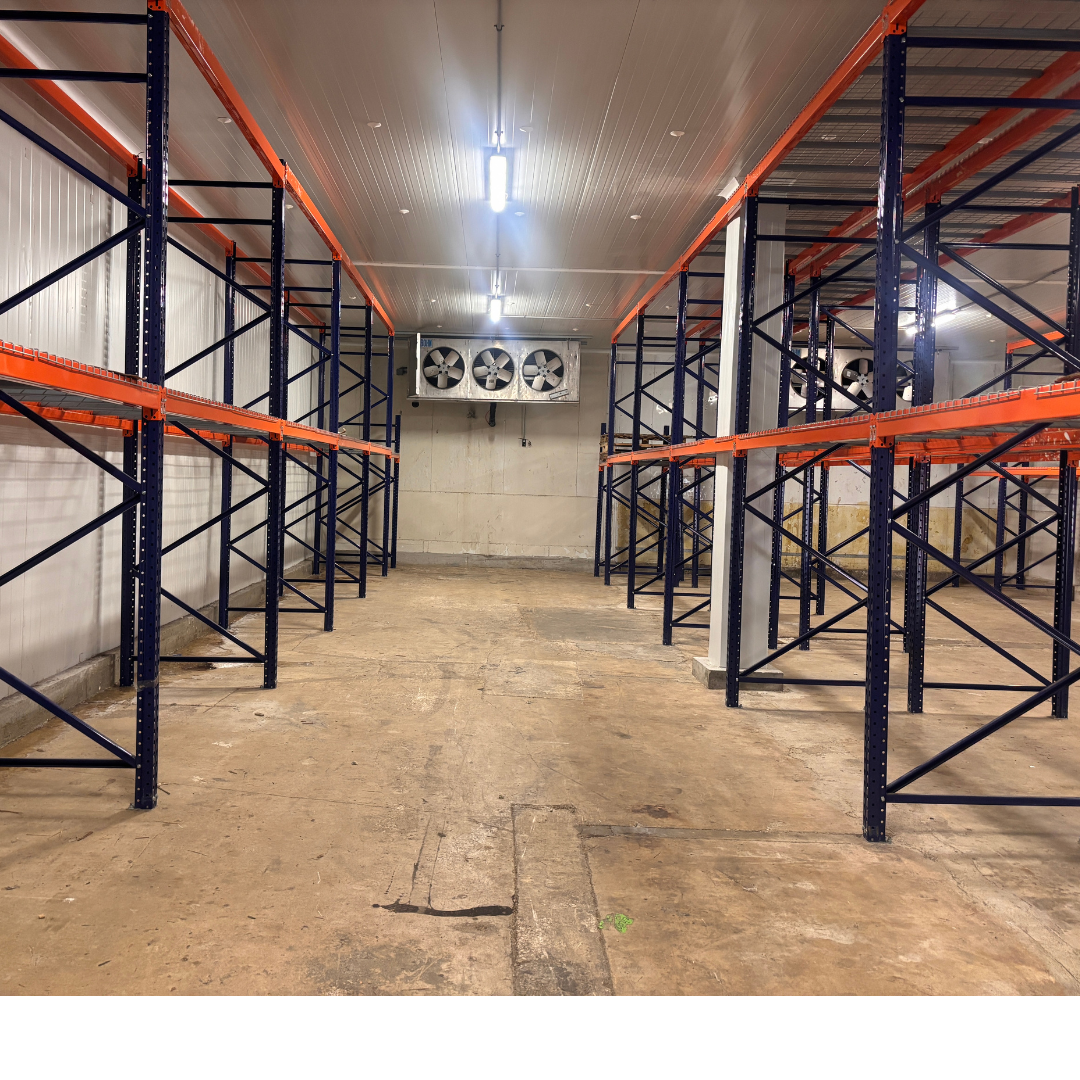
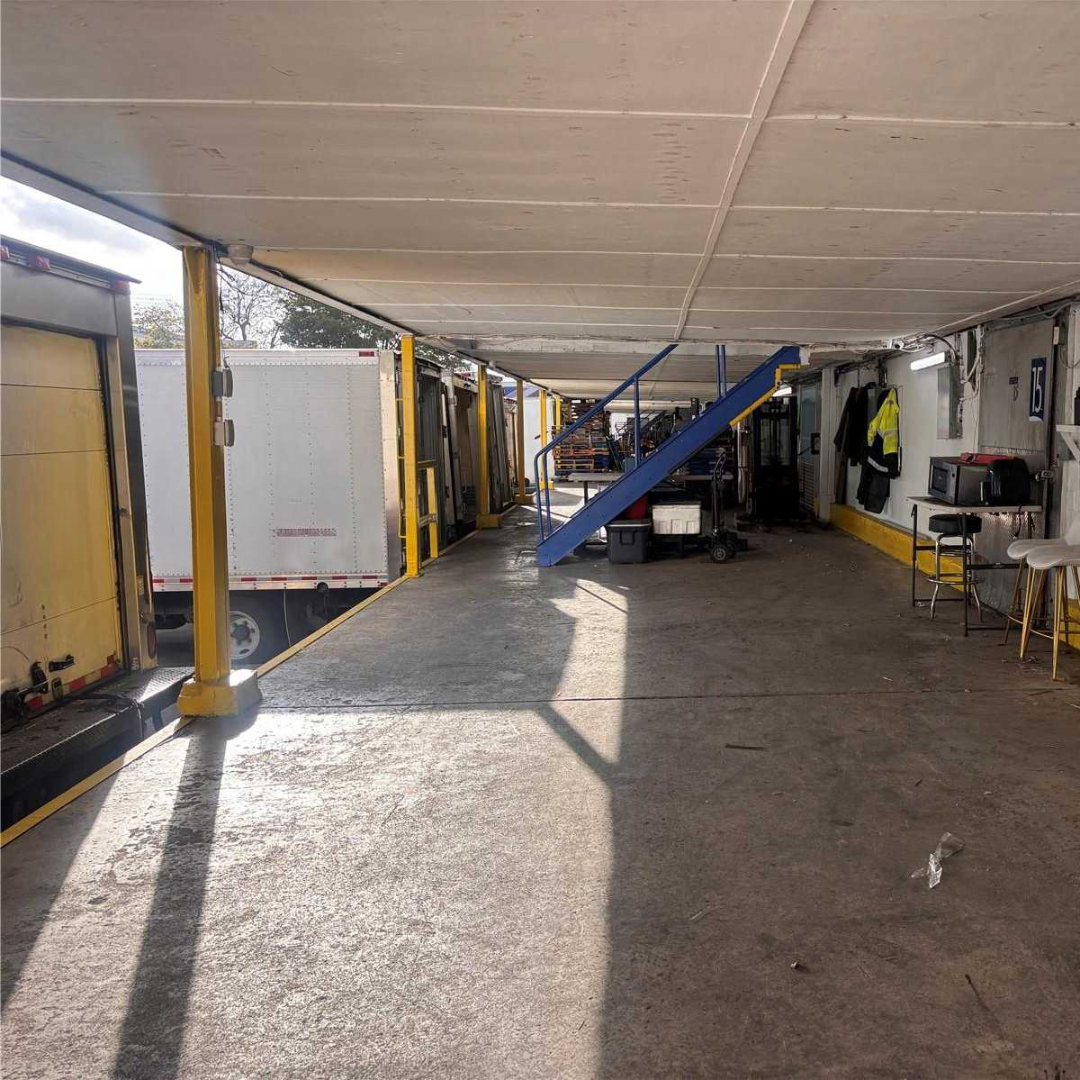
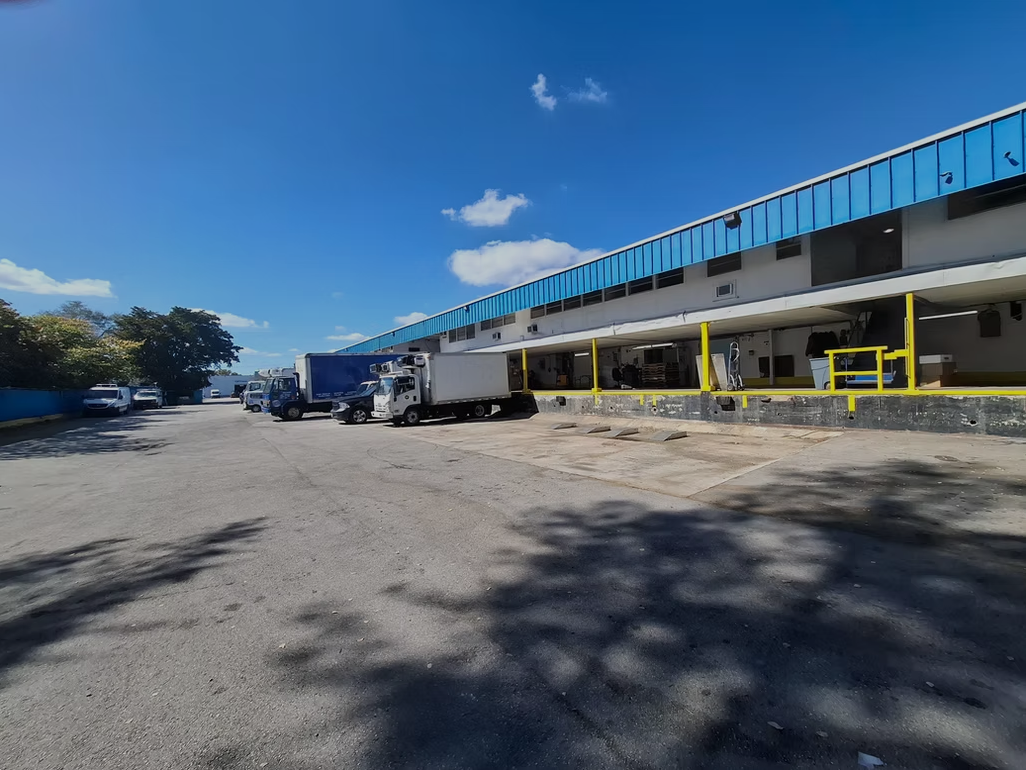
This isn't theoretical for us. We recently closed a ±11,000 SF cold storage lease at 10450 NW 29 Terrace in Doral — a turnkey temperature-controlled facility with ±9,500 SF of cooler/refrigeration, four-zone climate control down to 30°F, four dock doors with levelers, and a 48-hour backup generator. It absorbed quickly because that's exactly the small-bay refrigerated profile 3PL, food-service, and pharma operators have been hunting for 12–18 months across Miami-Dade.
Most cold storage built in South Florida over the last 15 years has been 50,000+ SF, designed for national 3PL operators. That's not the gap. The gap is in the 5,000–25,000 SF range — operators who don't have the capital or scale to anchor a build-to-suit but need real cold space, not pallet positions. Existing small-bay product is locked up in long-term leases. New small-bay product isn't being built because the construction math doesn't work at this scale (refrigerated build runs $300–$400 PSF; dry-to-cold conversion runs $80–$120 PSF over 6–9 months). With Miami-Dade industrial vacancy at historic lows, this isn't cyclical — it's structural.
The Doral–Airport West–Medley corridor in Miami-Dade County is one of the premier cold storage and industrial markets in the Southeast United States. Here's why:
PortMiami and Miami International Airport. Both are major import gateways for perishable goods — tropical produce, seafood, pharmaceuticals from Latin America and Europe. Cold storage capacity near these ports supports the entire regional supply chain.
Nearshoring and Latin America trade. As US companies restructure supply chains to reduce exposure to Asia, Miami becomes a natural logistics hub for Americas-based sourcing. Food and pharmaceutical distribution for the Caribbean, Central America, and parts of South America routes through Miami.
Industry estimates suggest the majority of US cold storage facilities are more than 25 years old, creating a structural flight-to-quality as tenants migrate toward modern, energy-efficient product. Outdated facilities are losing tenants to newer, automated, energy-efficient buildings. Investors who develop or acquire modern cold storage assets are capturing the flight-to-quality that's happening across the sector.
What Investors Should Know Before Entering This Market
Cold storage is a real opportunity, but it's also a specialized one. A few things every investor needs to understand:
Due diligence is more complex. Refrigeration systems, insulation integrity, electrical capacity, floor loads, and regulatory compliance for food-grade or pharmaceutical-grade storage all require specialized underwriting. You need advisors who understand this asset class, not just generalist industrial brokers.
Location within the market matters enormously. A cold storage building in the wrong submarket — far from ports, food distribution nodes, or pharmaceutical logistics hubs — underperforms. Proximity to PortMiami, MIA, and major food distribution centers isn't a nice-to-have in Miami; it's the difference between a stabilized asset and a struggling one.
New supply is peaking in some markets. In certain metros like Dallas, Chicago, and Jacksonville, elevated construction pipelines created short-term vacancy pressure in 2025–2026. Miami's market dynamics are different — constrained land supply in the Airport West corridor limits new competition.
The entry point in 2026 is attractive. As the development pipeline for new cold storage construction slows nationally, vacancy is expected to peak and rent growth is projected to re-accelerate toward 4% annually. Investors who enter during the current period of peak supply are positioned for the rental growth cycle that follows.
A note on risk. Cold storage is not without exposure. Electricity costs are a significant operating variable — refrigerated facilities consume 3–5x the energy of comparable dry industrial space, and rate volatility affects NOI. The HVAC-R industry is also mid-transition away from older refrigerants (R-22 phase-out is complete; R-410A is next), meaning some older systems carry future capital costs. Florida's hurricane and flood exposure affects insurance premiums, which have risen sharply across Miami-Dade in recent years. These are manageable risks — but they belong in any honest underwriting conversation.
Three Ways Investors Enter Cold Storage
Acquire stabilized. Buy an existing leased cold storage asset with in-place tenants. Lower risk, lower upside — cap rates in Miami's Airport West corridor are currently compressing as institutional buyers compete for the limited available product.
Develop ground-up. Build new refrigerated product, typically 20,000+ SF, targeting national 3PL or food distribution tenants. Highest return potential but requires significant capital, entitlement time, and construction expertise in a specialized asset class.
Convert dry-to-cold. Take an existing dry industrial building and retrofit it for temperature-controlled use. At $80–$120 PSF conversion cost over 6–9 months, this is how most small-bay cold storage gets created in Miami today — and where RISE Realty focuses its advisory work.
RISE Realty's Role in Miami Cold Storage
This isn't a theoretical asset class for us. RISE Realty actively works in the Miami cold storage and industrial market — representing tenants seeking refrigerated space, advising investors on acquisitions, and providing market intelligence on the Doral–Airport West corridor that most generalist brokers don't have.
If you're a food distributor, pharmaceutical company, or investor evaluating cold storage in South Florida, the conversation starts with understanding what's actually available, what leases look like, and where the real opportunities are in this market.
That's a conversation we're ready to have.
See our current cold storage and refrigerated warehouse opportunities in Miami →
Free Download: RISE Realty Cold Storage Market Brief
Get our exclusive South Florida cold storage market brief — covering the Doral–Airport West corridor, investment opportunities, and what's driving demand in 2026.
📋 Download the Free Market Brief →
About RISE Realty: RISE Realty is a Miami-based commercial real estate firm specializing in cold storage and industrial tenant representation, investor advisory, and commercial real estate services across South Florida. Our team is led by Keith Alan Darby, CCIM — Principal & Broker. The CCIM designation is held by fewer than 6% of commercial real estate professionals nationwide and represents the industry's highest standard of education and transactional expertise.
Sources: CBRE Cold Storage Outlook 2025; IBISWorld Refrigerated Warehousing & Storage 2025; Future Market Insights Cold Chain Market Report 2026; Coresight Research Online Grocery Report 2025; UPS Investor Day Presentation 2023.
Keith Alan Darby, CCIM
Principal & Broker · RISE Realty · South Florida Cold Storage & Industrial
Direct: 305-720-7925 · Office: 305-859-1606
Email: [email protected] Web: riserealty.com

Check out this article next