
Boutique by Design. Execution by Discipline.
By Keith Alan Darby, CCIM
RISE Realty is not a tax advisor. The information below is general and educational. Always consult your CPA before making any decision based on it.
When you buy a commercial building, the tax code normally makes you deduct its cost very slowly, over 39 years. Cost segregation is the strategy that speeds a large part of that up, and most buyers we work with have never had anyone walk them through it.
What cost segregation actually is
A cost segregation study is an engineering-based analysis that breaks your building down into its parts and reclassifies many of them into shorter depreciation categories.
Instead of treating the whole property as one 39-year asset, the study separates out the pieces that the tax code allows to be depreciated over 5, 7, or 15 years. The faster those pieces come off your taxes, the sooner you get the deductions, and the more they are worth to you today.
How it works, piece by piece

Personal property inside a building can often move to a faster depreciation schedule.
The structure itself, the walls, roof, and foundation, stays on the long 39-year schedule.
Personal property inside the building can often move to a 5 or 7-year schedule. Depending on the property, this can include things like dedicated electrical for equipment, certain flooring and finishes, cabinetry, and specialized plumbing.

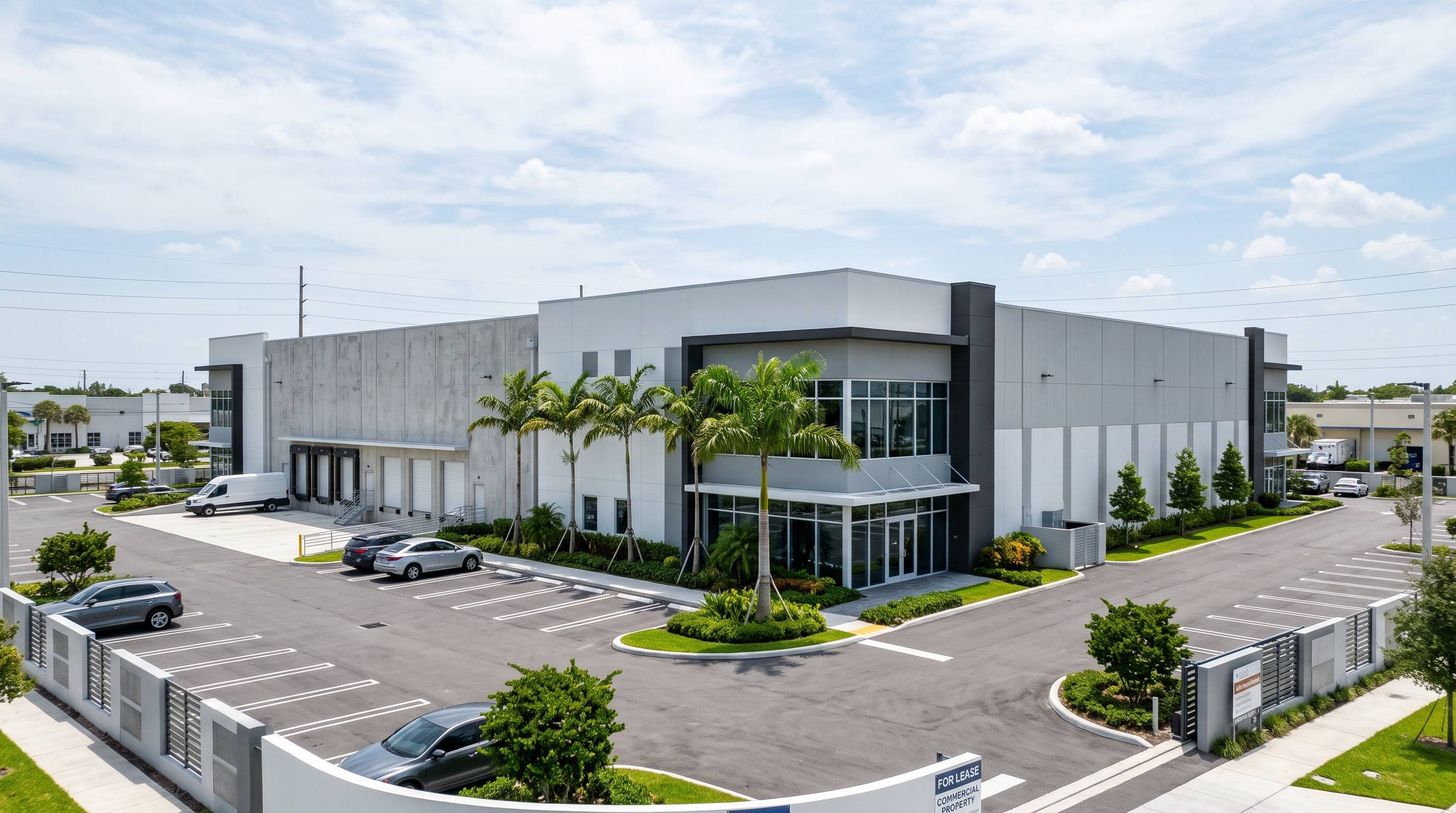
Commercial property parking lot and landscaping, land improvements on a 15-year depreciation schedule
Land improvements can often move to a 15-year schedule. These are the things outside the four walls: parking lots, sidewalks, landscaping, site lighting, and fencing.
How much of a building's cost moves into those faster categories depends heavily on the property type and the specifics of the deal, and that is exactly what the study determines. Your CPA and a qualified cost segregation specialist run the numbers for your situatio
Why the timing matters so much

CPA reviewing commercial real estate depreciation and cost segregation with a Miami business owner
A dollar of deduction today is worth more than a dollar of deduction spread across the next four decades. Cost segregation pulls deductions forward into your early years of ownership, when they can offset income and improve your cash flow right when you are investing the most in the property.
That is the whole point: same building, same total deductions over time, but a very different schedule, and that schedule can meaningfully change the economics of a deal.
Who it tends to help most
Cost segregation is worth exploring for owner-users buying their own space and for investors acquiring commercial property, especially on larger acquisitions where the dollar amounts are significant. It is less useful in some situations, for example if you expect to sell quickly, since there are tax consequences on the back end that your CPA will walk you through.
That is the honest part of this: it is a powerful tool, but it is not automatic and it is not right for everyone. The only way to know is to run your specific numbers with your CPA before you close.
Where RISE comes in
We are not your tax advisor, and we will never pretend to be. What we do is understand how these strategies affect a deal, so that when we are helping you evaluate a purchase, we are looking at more than just the price per square foot. We help you see the full picture, then connect it with your CPA so the tax side is handled by the right professional.
👉 Thinking about buying commercial property in Miami? Talk to us, and your CPA, before you sign.
Related reading:
What NNN Actually Means and What Miami Tenants Get Wrong About It
Disclaimer: This article is for general informational purposes only and does not constitute tax, legal, financial, or accounting advice. Cost segregation, depreciation schedules, and their tax treatment vary by property, ownership structure, and individual circumstances, and tax law changes over time. Always consult a qualified CPA or tax advisor before making any decision based on this information.
About RISE Realty: RISE Realty is a Miami-based commercial real estate firm specializing in tenant and buyer representation, with a focus on industrial and cold storage real estate, across South Florida. RISE represents tenants exclusively, which means undivided loyalty on every deal. Our team is led by Keith Alan Darby, CCIM, President and Designated Broker of RISE Realty. The CCIM designation is held by a small fraction of commercial real estate professionals nationwide and represents the industry's highest standard of education and transactional expertise.
Keith Alan Darby, CCIM
President and Designated Broker | RISE Realty · South Florida Tenant Representation
Direct: 305-720-7925 · Office: 305-859-1606
Email: [email protected] Web: riserealty.com
Specializing in tenant representation for office, industrial, cold storage, and retail across Miami-Dade, Broward, and Palm Beach.

Check out this article next